

By lilly Joynes
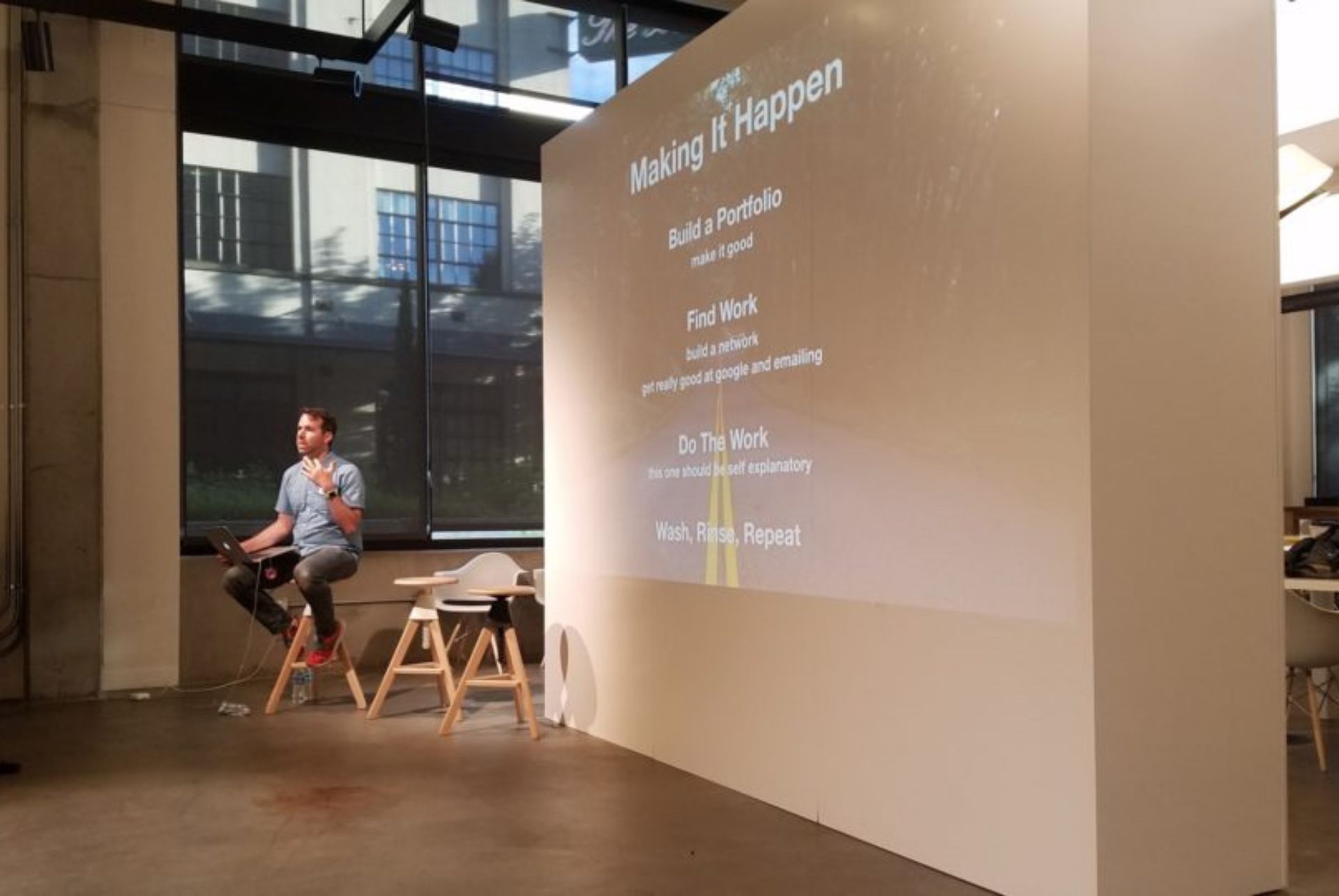
Working for yourself doesn’t mean you’re on your own! As our host for the evening Dan Short put it, “Freelancers are alone, together. But we’re in the same boat.”
Here’s a roundup of some of the best advice we heard from the panelists:
Dan Short (10+ years freelancing from coast to coast)
Dan is your hilarious realist. He’s been around long enough to know what’s what, and more importantly, how to put it in terms we can all actually understand.
-
Building a portfolio: “Do the work you’re passionate about. If it’s cool and you can show it off, do it.”
-
Setting the terms: “Write a check that your butt can cash – that’s the scope of agreement. Anything beyond the original requires a new contract or work-scope agreement, so it’s also a chance to renegotiate.”
-
Getting paid: “Don’t be afraid to be a squeaky wheel! Keep following up until you get what you were promised. You can organize other freelancers on a gig if they’re in the same situation. Make sure you also check your contract to see if any late fees should be applied.”
-
Heidi: “Learn how to speak frankly about money.”
-
Heidi Zimmerman (15+ years of post experience in documentary features, narrative, and promotional media.)
Heidi is the lowkey expert. She’s not the loudest one in the room, but she’s definitely one of the smartest! After editing videos “for forever,” she’s amassed a ton of practical advice on how to make a living as a freelancer.
-
Contracts: “Get the rights to your work, and get it in writing. I now always put in my contract that I can use 5 minutes of my choosing – not theirs, since we never agree – for personal publicity. I also include that I should get final copies of the project. Point to the phrasing in your contract and people won’t mess around!”
-
Soft introductions: “Offer your services casually, like ‘Hey, I’d be happy to give a second set of eyes on something you’re cutting and give you my feedback.’ Sometimes it’s a few years down the road, but that leads to more work than you can imagine. Be professional, but don’t go overboard to the point where they feel like they have to hire you.”
-
Sharing the load: “Develop a couple fellow relationships with people you can recommend when you’re not available. If you’re not available but you give the client someone else they can trust, you’ll always be the first person they call.”
-
Roland: “You still solve their problem, even if you can’t be part of the project.”
-
Roland Gauthier (Co-founder and Executive Producer at Hinge; OMPA Board President)
Roland is one of those rare accessible gurus – the kind that has a thriving career but still makes time for the little guy. He offered his freelancing insights from the business-owner perspective.
-
RFPs: “Provide something as close to what they want as possible – they want to know you’re a sure thing. But bring your extra something that sets you apart!” At the same time, he says “It’s very unlikely that you’ll get paid for a bid or pitch, so gauge the potential value of a project against what they want from you.”
-
Staying connected: “People move on from companies, so you need to form new relationships to keep yourself front of mind. Then you have to back good relationships up with great work – especially if someone isn’t familiar with you.”
-
Asking for help: “Portland is a lot friendlier and less cut-throat than some bigger markets, so you may be able to get a ‘competitor’ to give you advice.”
-
Dan: “Find people who aren’t threatened by you – if you’re junior, ask a senior – and have no reason not to help you.”
-
Pints & Pixels is a monthly meeting for Portland’s VFX and Post community. Join the Facebook group to hear about their upcoming events.
Share This Resource:
Continue Reading